Residential synthetic lawns
Replace a patchy, hard-to-maintain yard with a surface that stays neat without weekly mowing — front yards, backyards, side yards and courtyards.
Licensed & insured · Serving Miami & South Florida since 2019

Artificial turf stays green without routine mowing or irrigation, and it can be installed where natural grass never grows evenly.
1M+
Sq ft installed
500+
Projects done
2019
Serving Miami
Maintaining natural grass in Miami can feel like a constant cycle. Intense sunlight dries out exposed areas, heavy rain creates mud and standing water, and regular mowing, watering, fertilizing and patching take time without guaranteeing a consistently healthy lawn.
Professionally installed synthetic lawns give homeowners and property managers a cleaner, more dependable alternative. Grass Masters Exteriors prepares the ground, plans the drainage, secures the turf and finishes the surface around the way you actually use your property.
Miami lawns deal with extreme shifts between heat, humidity, heavy rain and dry periods. Natural grass thins out in high-traffic areas, develops weeds, turns muddy after storms and needs frequent irrigation to hold its color. A synthetic lawn gives you a uniform surface without depending on soil quality, seasonal growth or a demanding maintenance schedule.
Backed by industry-leading warranties, we deliver and install turf of any shape, size or color.
Why turf
Artificial turf does not require routine irrigation to stay green. You may still rinse the surface or water nearby landscaping, but the lawn itself does not depend on sprinklers to grow.
Synthetic grass does not grow, which eliminates regular mowing, edging and grass-clipping cleanup — less time and less equipment to keep the yard presentable.
A properly prepared base supports the turf and lets water move through the drainage system, reducing the mud, exposed soil and worn patches common in natural lawns.
Turf holds a green appearance through hot weather, frequent rain and seasonal changes. It does not go dormant or develop dry patches the way natural grass can.
Synthetic lawns give you a defined area for relaxing, playing, entertaining and spending time with pets. Routine brushing and rinsing keep the surface clean.
Artificial grass does not need fertilizer, weed treatment or pesticides to grow. Other parts of the landscape may still require care depending on the plants around the property.
Where it goes
A residential backyard, dog run, playground and commercial entrance do not need the same turf product, base preparation, infill or finishing details. We evaluate how the area will be used before recommending an installation.
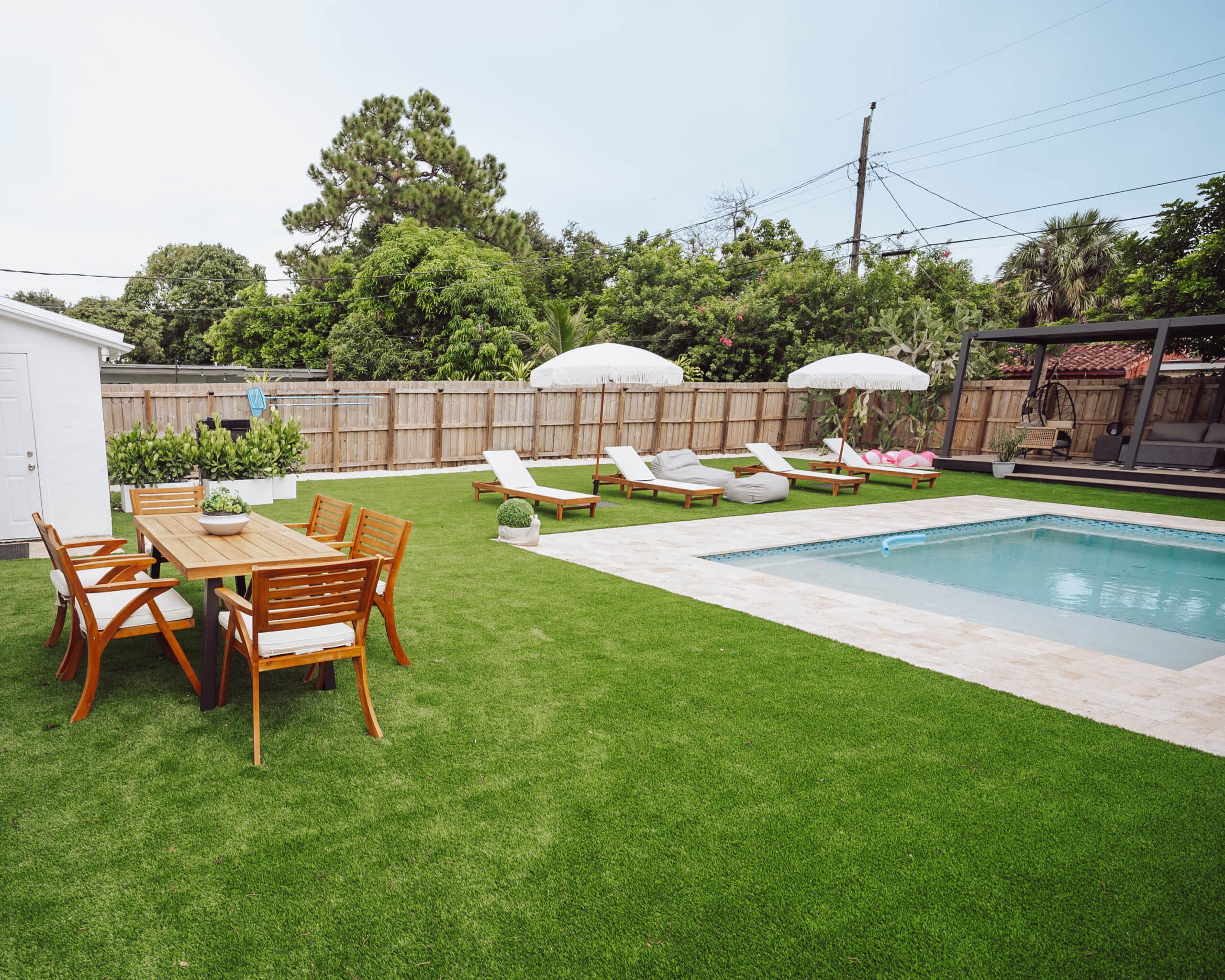
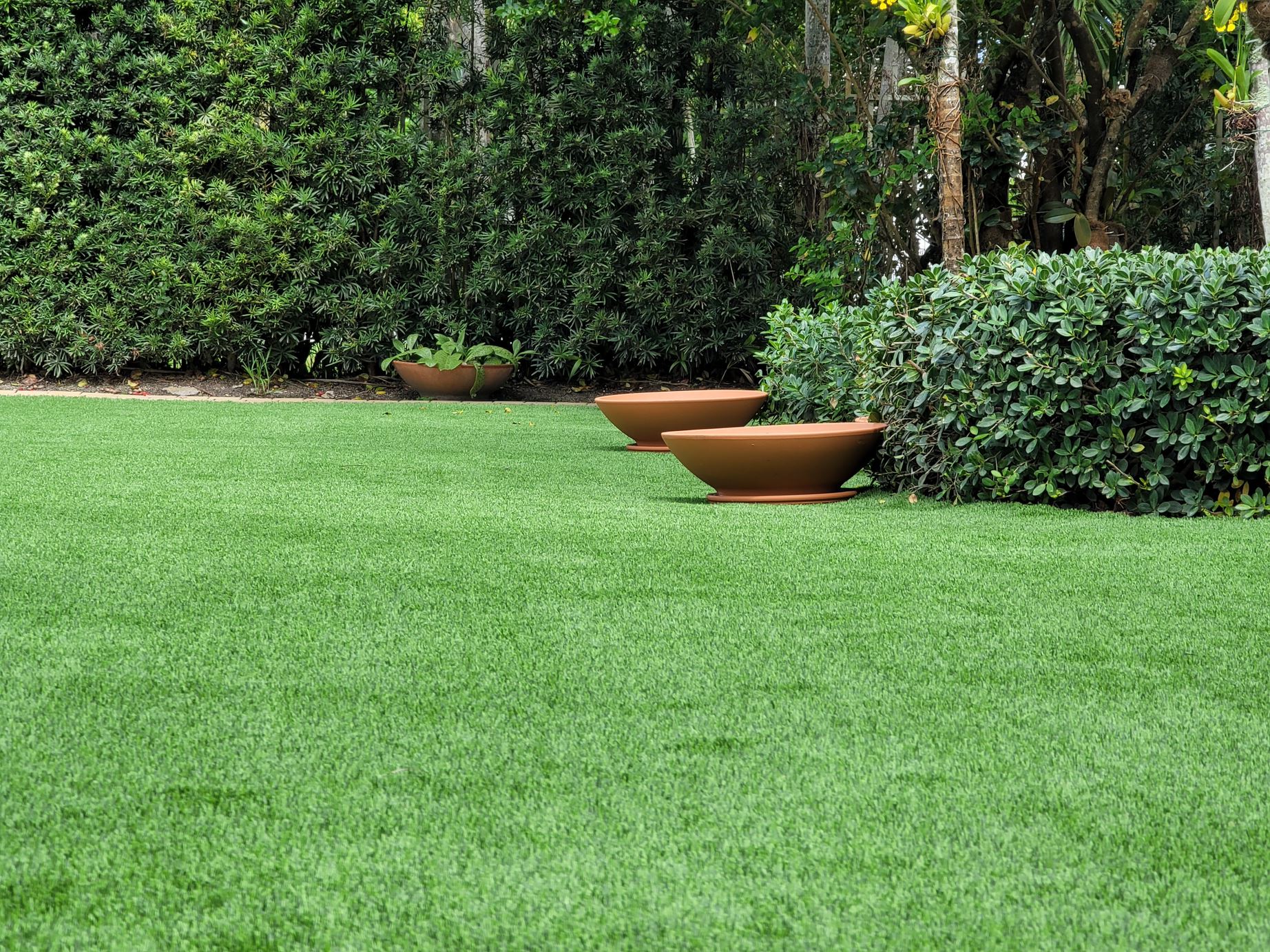
Replace a patchy, hard-to-maintain yard with a surface that stays neat without weekly mowing — front yards, backyards, side yards and courtyards.
Dogs wear down natural grass near gates, fences and paths. Pet turf is installed with drainage and infill selected for regular animal use; waste still needs to be removed and the surface rinsed.
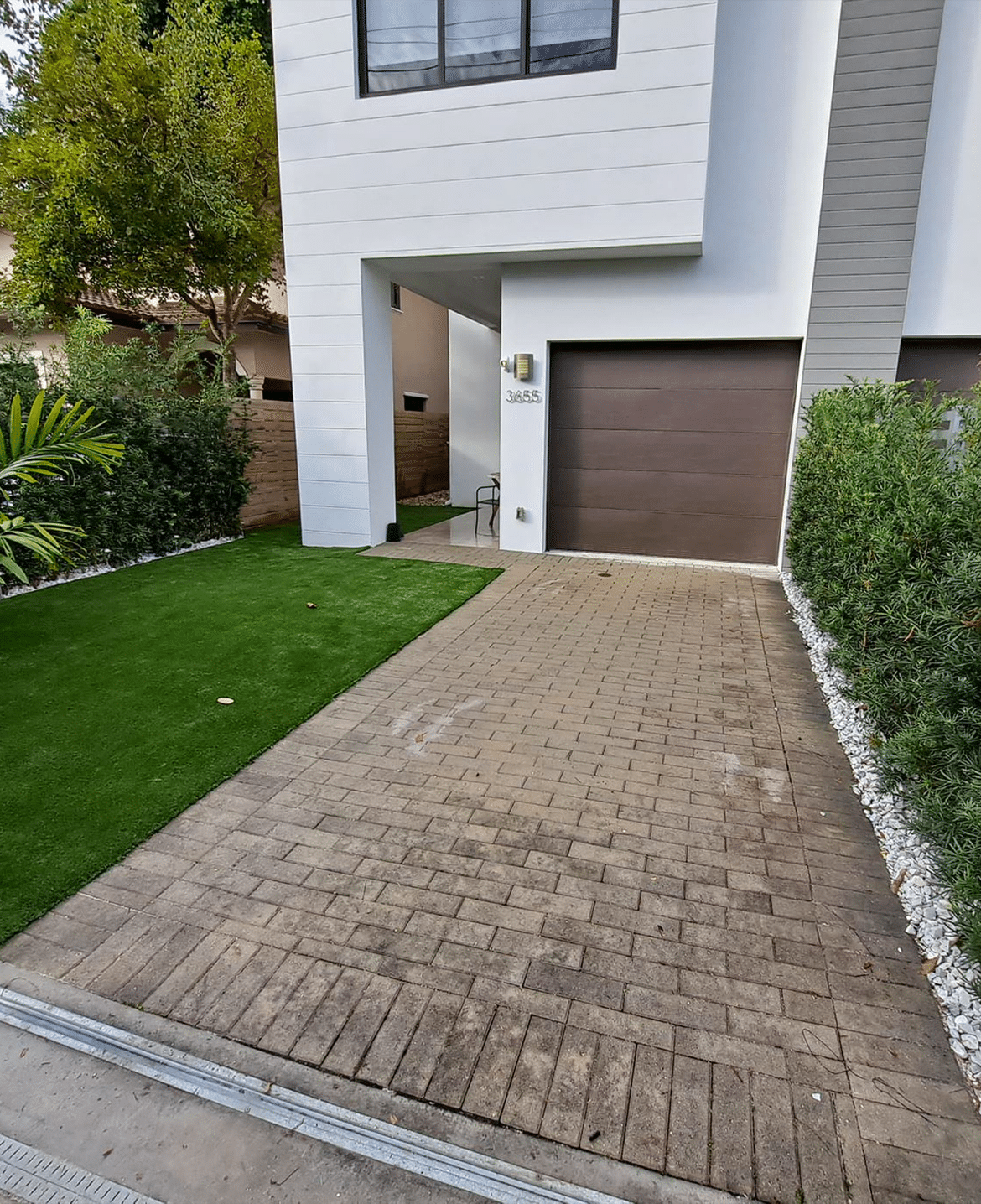
Entrances, courtyards, common areas and medians keep a consistent appearance under foot traffic with far less mowing and watering.
Active play projects may require impact-absorbing padding, suitable infill, drainage and products selected for the age group and intended use.
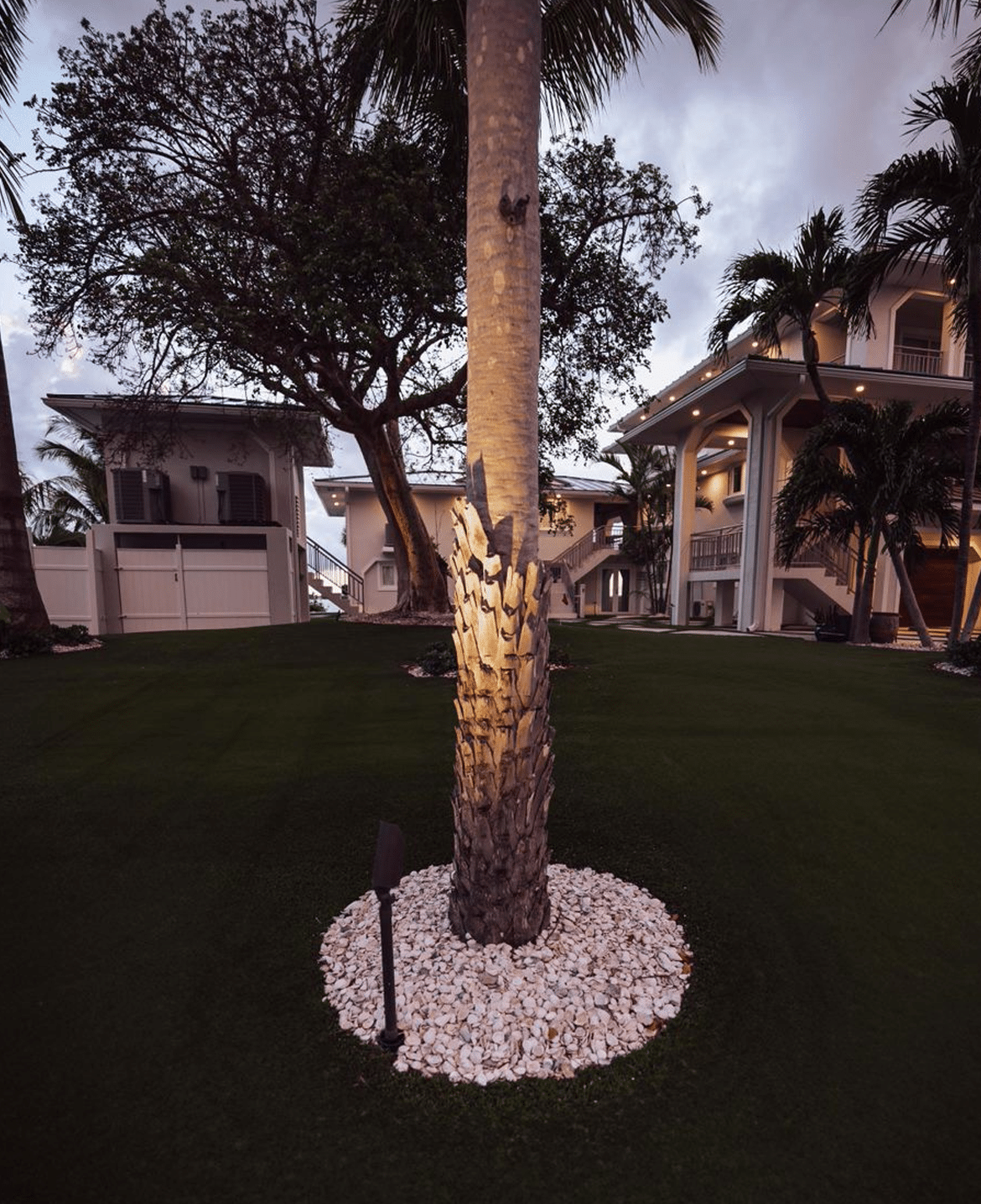
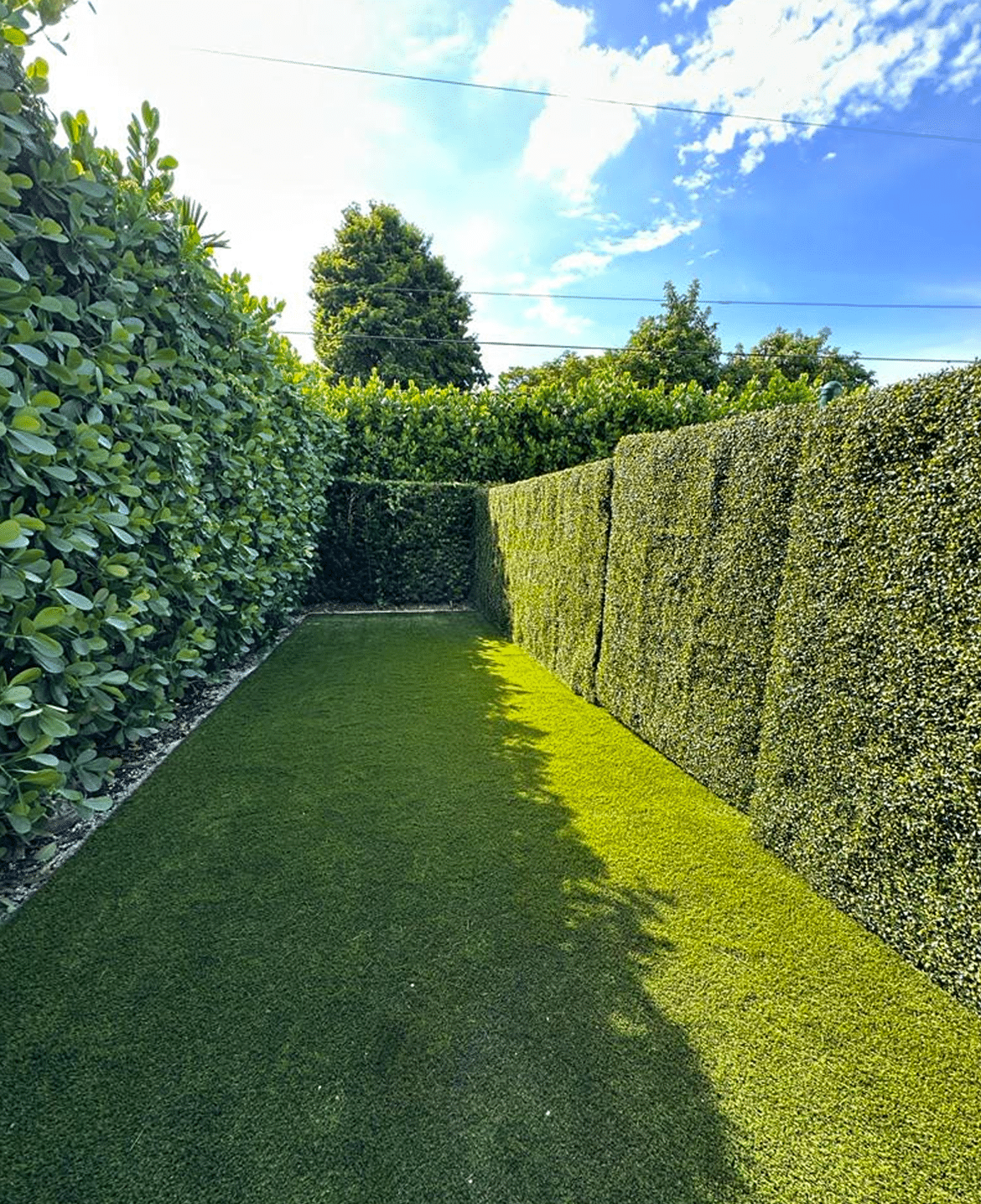
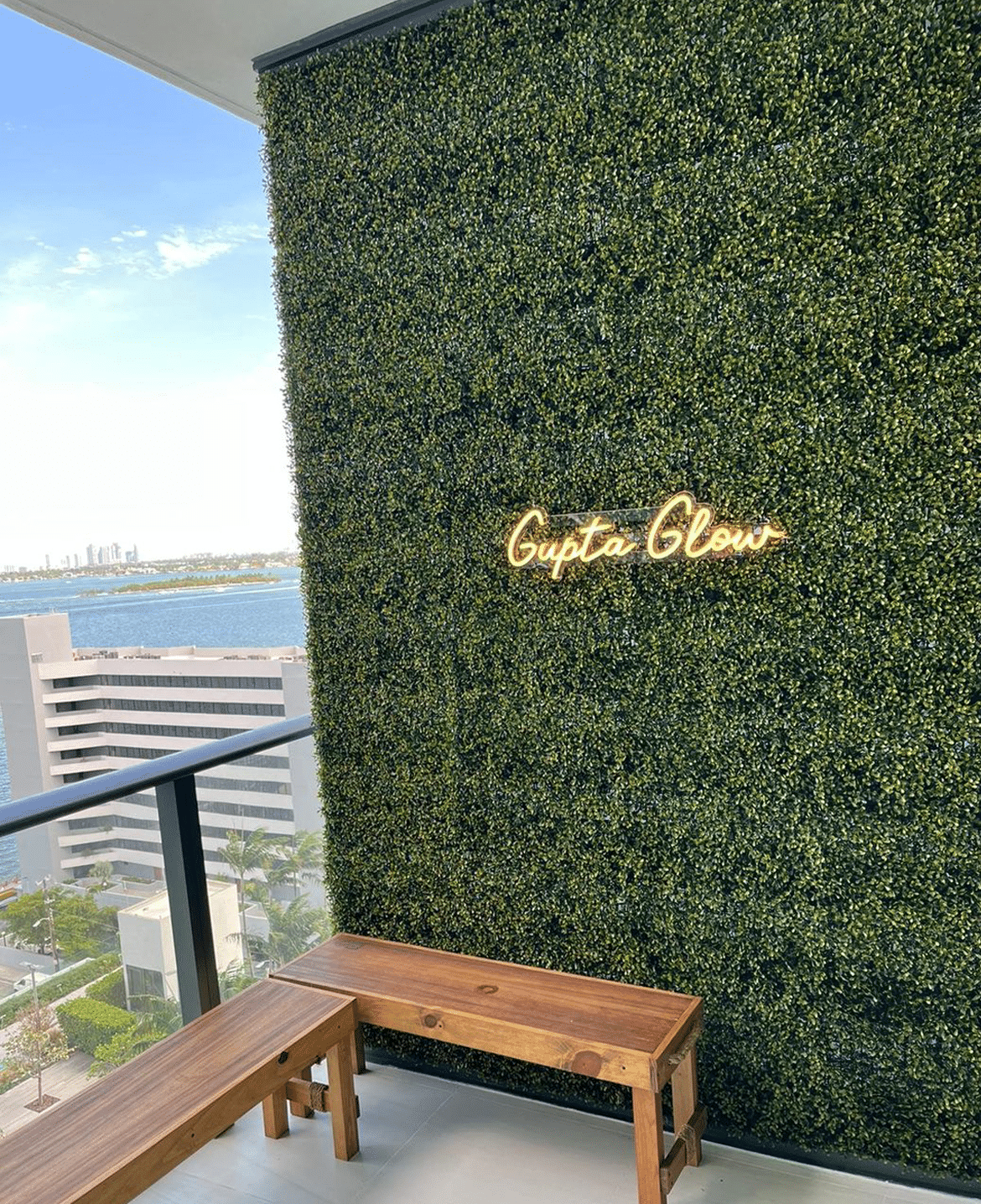
Turf adds color and texture where natural grass cannot grow. These installs need careful planning around drainage, waterproofing, weight, edges and the surface beneath.
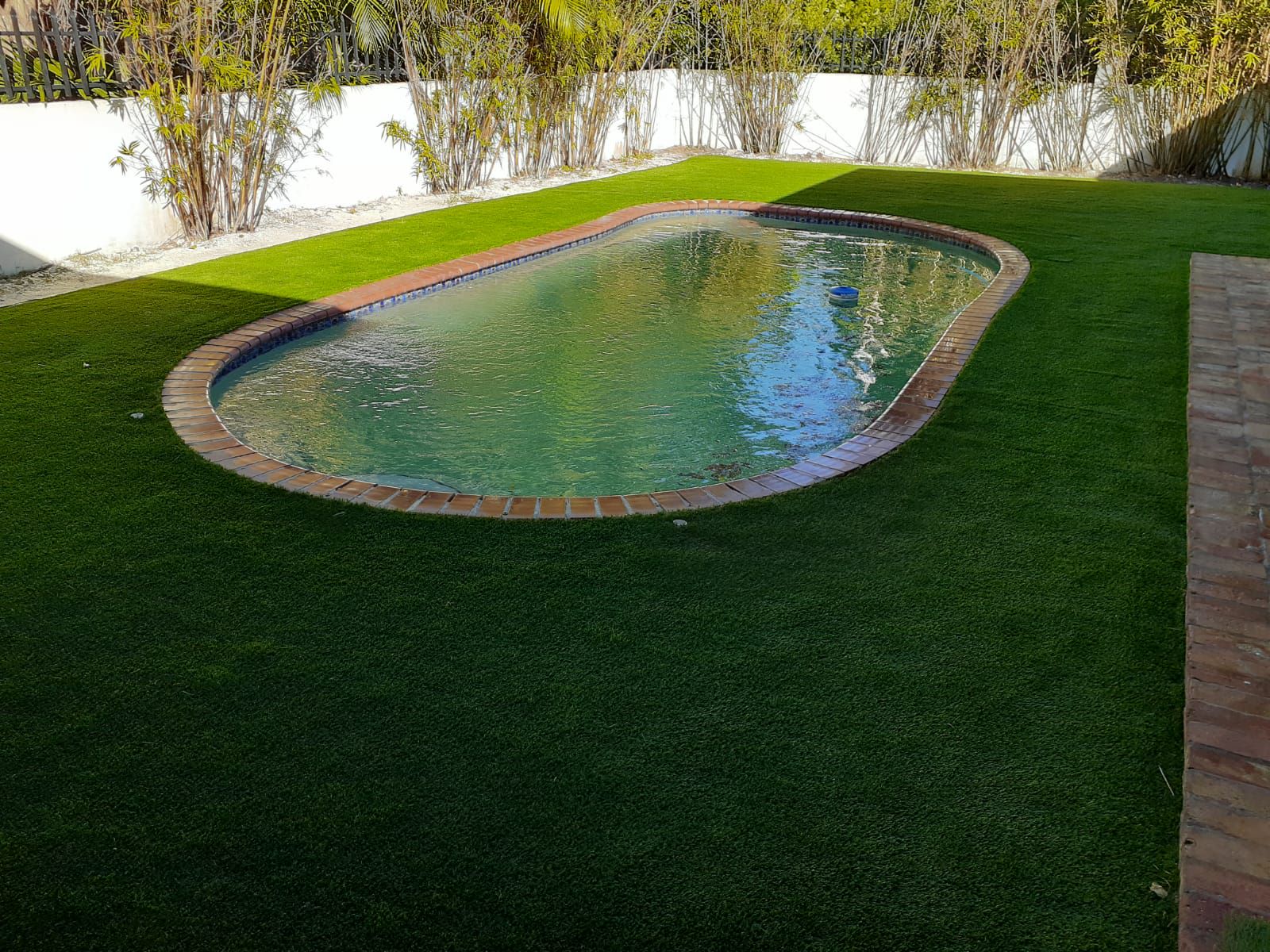
Softens the area around a pool and removes soil and clippings near the water, accounting for drainage, chemical exposure, surface temperature and deck transitions.
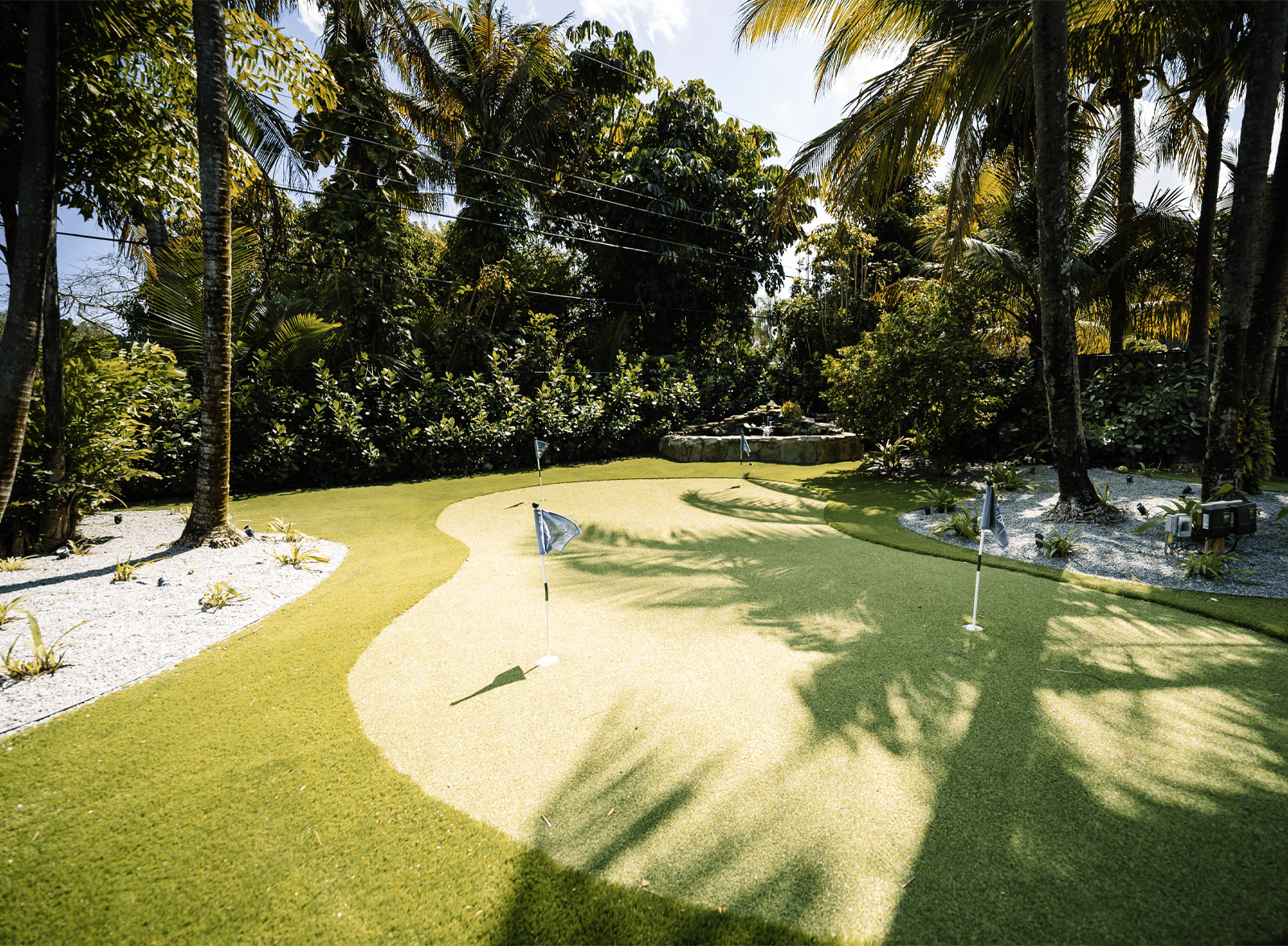
Base, contours, cups, fringe and turf speed are planned around the intended playing experience rather than treated like a standard lawn.
Choosing turf
Choosing by appearance alone leads to a lawn that does not perform for its intended use. We help you weigh the options against the property and your priorities.
The length of the blades. Taller turf can look fuller, while shorter products are often easier to maintain in high-traffic or specialized areas.
Density affects how full the lawn looks and how it responds to traffic. Denser products suit visible residential areas; firmer, shorter surfaces suit other uses.
Fibers are manufactured in different shapes to influence resilience, softness and appearance. The right option depends on decorative, recreational or pet use.
Quality turf blends several shades of green with brown thatch fibers so the lawn stays believable in Miami's bright sunlight.
Backing holds the fibers together and lets water pass through drainage openings. Performance also depends on base material, slope, soil and where water goes next.
Infill adds weight, supports the blades and influences performance. The right choice depends on heat, pets, traffic, drainage, odor control and manufacturer requirements.
Our process
Turf develops wrinkles, visible seams, uneven areas, drainage problems and lifting edges when the ground is not prepared correctly. We treat the work beneath the turf as carefully as the visible finish.
We evaluate size and shape, existing grass, soil, drainage, irrigation, access, edging, nearby trees and intended use to determine turf type, base prep and layout.
Grass, roots, weeds and unsuitable surface material are removed to create room for the base. Excavation depth depends on conditions and install type.
The area is shaped to support water movement and reduce low spots. Turf drains through its backing, but the base and property still need somewhere for water to go.
A suitable aggregate base is installed, graded and compacted to a firm surface. Correct compaction reduces settlement, wrinkles and uneven areas later.
A compatible geotextile may be installed depending on soil, base design and drainage. It helps separate layers and reduce weed growth, though no install is weed-proof forever.
Turf is positioned to reduce unnecessary seams and keep fibers running in a consistent direction, then cut around curves, beds, pavers, walkways and walls.
Sections are joined so seams stay flat and less visible, and edges are fastened around the perimeter to reduce movement and lifting.
Infill is distributed across the turf and brushed into the fibers so blades stand upright and the finish looks even.
We review seams, edges, transitions, drainage and overall finish, then walk you through basic cleaning and maintenance.
Why Grass Masters
Miami's rainfall, humidity, heat, soil, irrigation and flat elevations shape how a lawn should be installed. We plan grade, base, drainage and layout around them.
A pet area, putting green, playground and decorative front lawn should not automatically use the same turf. We match product and method to real use.
A smooth surface depends on what is underneath. We focus on excavation, grading, base installation, compaction and drainage before the turf goes down.
Our crew plans turf direction, joins sections carefully and secures the perimeter so the lawn does not read as an amateur install.
You get a defined proposal covering area, site preparation, turf selection and installation requirements, so you know what is included before work begins.
We understand how turf interacts with pavers, planting beds, walkways, irrigation and drainage — a coordinated result across the whole exterior.
Upkeep
Synthetic grass needs far less routine work than a natural lawn, but it is not completely maintenance-free.
Your schedule depends on tree coverage, pet use, traffic, nearby construction, weather and the type of turf installed.
Our work
Real Grass Masters projects across Miami-Dade and Broward — no renders, no stock photography.
Your outdoor space should be somewhere you can relax, play and entertain without planning every weekend around mowing, watering and patching damaged grass. Contact Grass Masters Exteriors to compare turf options, discuss drainage and installation and request a quote for your yard.
Start your project
Tell us what you have in mind. You don't have to be your own project manager anymore — we will handle everything.